

Start by separating the different warranty typesCopy section link
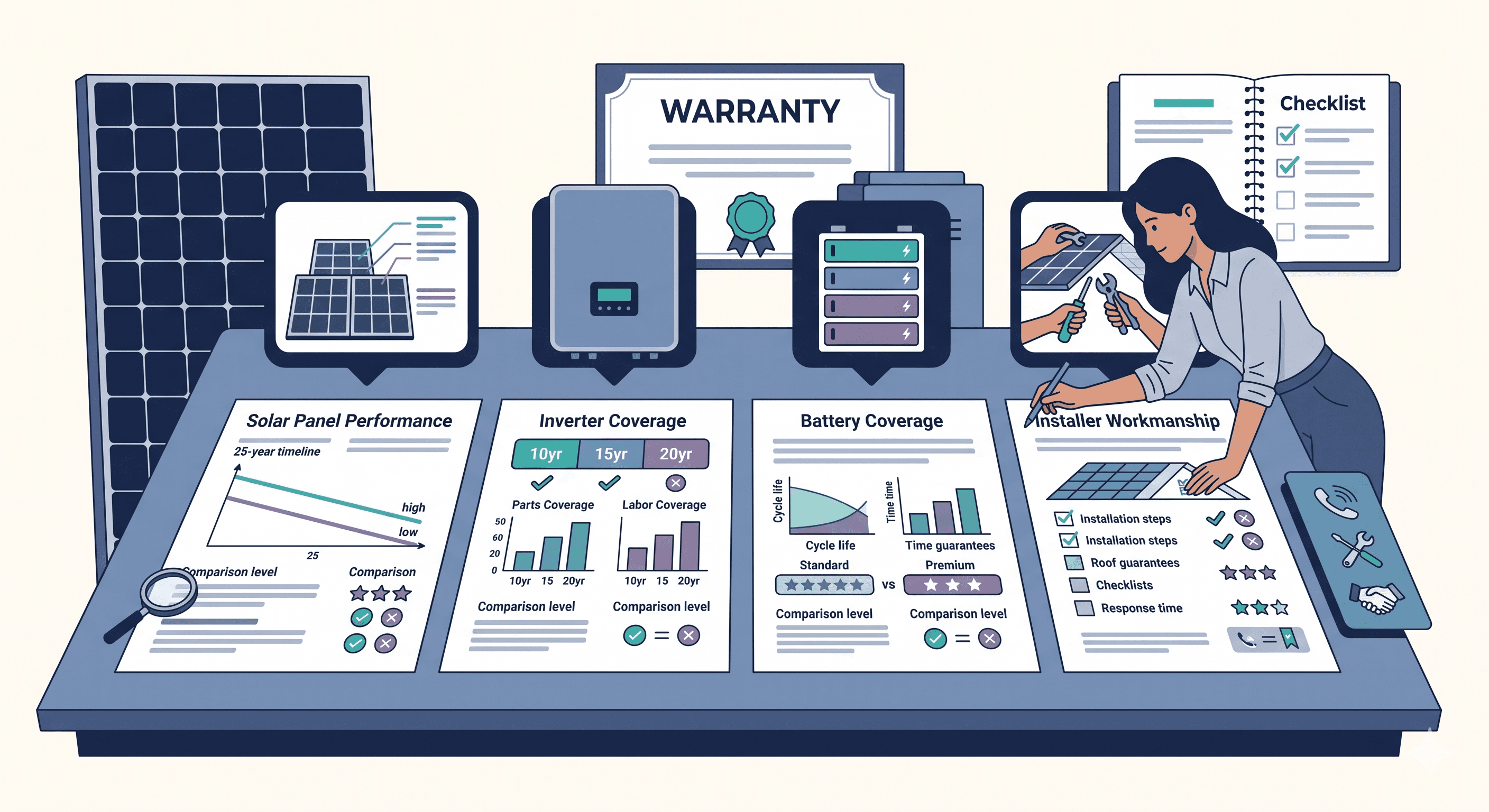
A solar proposal can mention several warranties in one line, but they protect different things. Module product warranty covers product defects. Module performance warranty concerns output degradation over time. Inverter warranty covers a different device with a shorter practical risk cycle. Battery warranties often depend on cycles, depth of discharge, operating conditions, and compatible equipment. Workmanship warranty covers installation quality and is usually supplier-side.
Panel warranty years can hide weak local claim supportCopy section link
Long panel warranty language is useful only if the buyer can actually make a claim. Ask who represents the manufacturer locally, whether the supplier has handled claims before, what evidence is required, and whether replacement stock or equivalent substitutes are available. The more distant the support path, the less useful the headline warranty may be in practice.
Inverter and monitoring warranties affect daily system operationCopy section link
The inverter is the active control point of the system. If it fails, production can drop quickly even when the panels are fine. Buyers should check inverter warranty length, local replacement path, service response expectations, monitoring access, and whether grid events or improper installation can void coverage.
Workmanship warranty is where installation accountability livesCopy section link
Many early problems come from installation quality, not factory defects. Weak cable management, water ingress, structure issues, poor earthing, loose terminations, and missing labels may not be solved by a manufacturer warranty. The supplier's workmanship warranty should define what is covered, how long it lasts, and how service requests are handled.
Handover evidence makes warranty protection usableCopy section link
Warranty protection depends on evidence. The buyer should leave handover with serial numbers, invoices, warranty certificates, manuals, commissioning readings, as-built drawings, and monitoring credentials. The post-handover monitoring guide explains why this evidence matters after the supplier leaves the site.
Warranty review checklist
- ✓Confirm exact product warranty, performance warranty, inverter warranty, battery warranty, and workmanship warranty.
- ✓Ask who files claims locally and what documents, serial numbers, photos, logs, or tests are required.
- ✓Check exclusions for installation errors, grid events, water ingress, corrosion, shading, misuse, and unauthorized service.
- ✓Make monitoring access and handover records part of the warranty evidence trail.
Frequently asked questions
No. Buyers should distinguish product warranty, performance warranty, local claim handling, exclusions, and whether the exact module model is covered.
For many buyers, inverter, workmanship, and local service accountability matter most because these are more likely to create near-term operational issues.
Keep invoices, datasheets, serial numbers, as-built drawings, commissioning records, monitoring access, photos, manuals, and supplier handover documents.
Sources and notes
Continue with adjacent guides
Buyer action
Want clearer supplier options for your project?
Share your requirement once and compare suppliers on scope, pricing, and execution fit before you commit.