

What is the best solar inverter in Pakistan?Copy section link
The best inverter is not the one with the loudest market reputation. It is the inverter that matches the buyer's project. A residential roof with outages, a school with daytime load, a factory with a strict shutdown window, and a commercial site considering batteries may need different inverter logic. Before comparing brands, define the architecture: on-grid, hybrid, backup-capable, battery-ready, or a larger C&I arrangement.
String vs hybrid inverter: the buyer differenceCopy section link
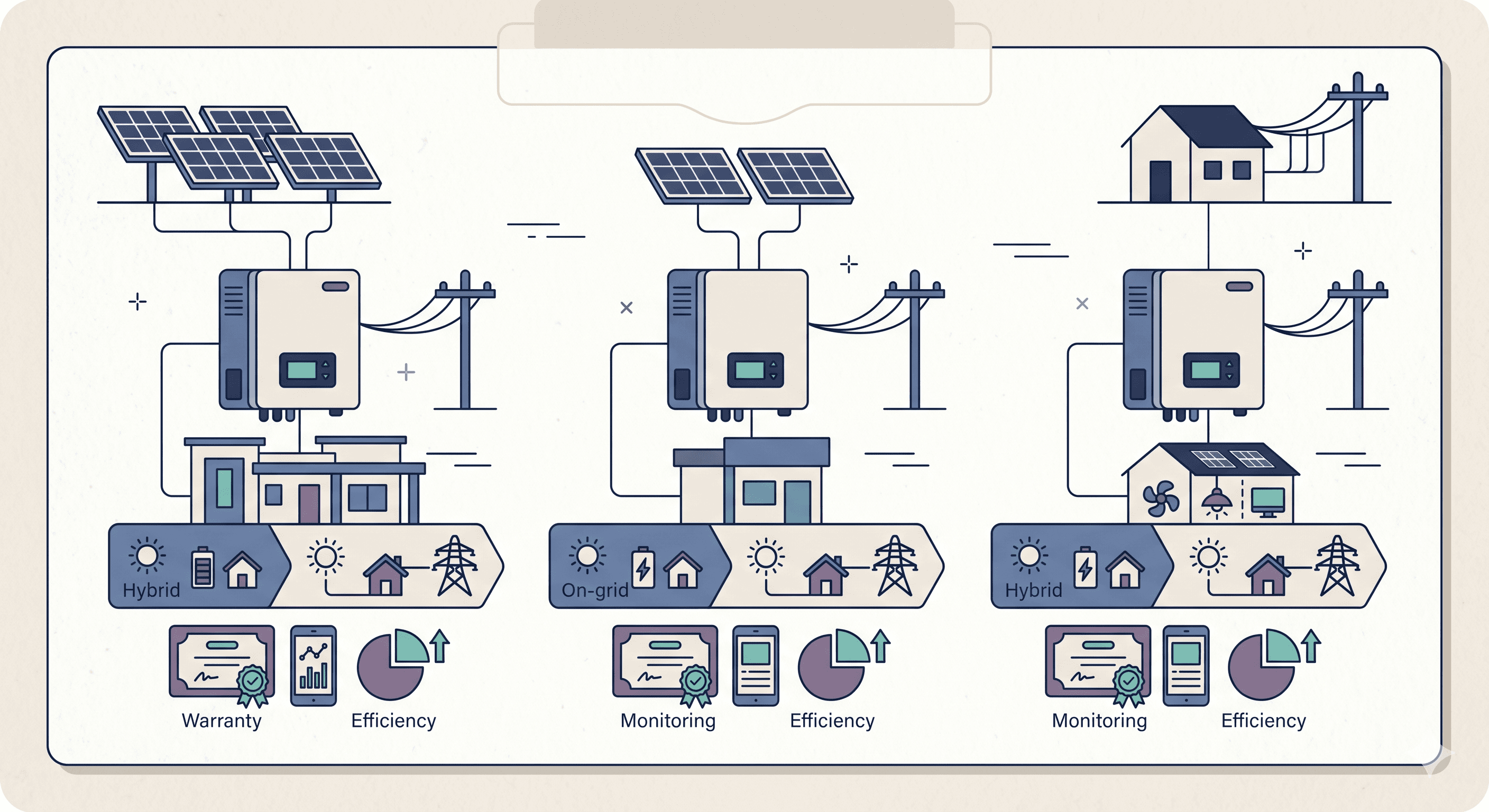
A string inverter is usually the simpler grid-tied option for systems focused on daytime generation and direct consumption. A hybrid inverter adds the ability to work with batteries and, depending on configuration, support selected loads during outages. That does not make hybrid automatically better. It means the buyer is paying for optionality or backup capability that should be tied to a clear use case.
Proposal review starts with the exact model numberCopy section link
Generic words like premium, German, European, or Tier 1 do not tell you enough. The proposal reading guide explains why exact model references matter. For inverters, the model number lets you verify MPPT count, voltage window, maximum DC input, AC output, efficiency, communication features, certifications, operating temperature range, and warranty terms.
Sizing should explain the DC/AC ratio and clipping trade-offCopy section link
A solar proposal may show one DC capacity and a smaller inverter AC rating. That is not automatically wrong. Some DC oversizing is common because panels do not always operate at nameplate output. But the supplier should explain the DC/AC ratio, inverter limits, expected clipping, and why the choice is appropriate for the site. A buyer should not be asked to approve a ratio they cannot see.
Monitoring access is part of the productCopy section link
Inverters often provide the monitoring data buyers need after handover. Without access, the buyer may struggle to see underperformance, outages, export patterns, or fault history. Monitoring is not only a nice app feature. It is evidence for warranty claims, maintenance decisions, and supplier accountability.
Warranty strength depends on the local service pathCopy section link
A ten-year warranty is only useful if the buyer knows who will diagnose the fault, remove the failed unit, process the claim, provide a replacement, and reinstall the inverter. Use the 12 supplier questions to ask this before award, not after an outage.
Compare inverter choices inside the full proposalCopy section link
A better inverter can be a strong reason to choose a proposal, but only after scope and commercial terms are normalized. Use the proposal comparison guide to compare the inverter alongside module choice, structure, protections, approvals, monitoring, warranty handling, and total cost. The right decision is the best fit, not the most impressive isolated specification.
Inverter selection checklist
- ✓Ask for exact inverter brand, model, datasheet, warranty term, and local support path.
- ✓Confirm whether the proposal is on-grid, hybrid, battery-ready, or backup-capable.
- ✓Check DC/AC sizing logic, string design assumptions, monitoring access, and shutdown behavior.
- ✓Compare service response and replacement process, not only headline warranty years.
Frequently asked questions
There is no single best inverter for every buyer. The best choice is the model that fits your system size, grid behavior, battery plan, monitoring needs, warranty expectations, and local service support.
A string inverter converts PV generation for grid-tied use. A hybrid inverter can also manage batteries and backup functions, depending on the model and design. Hybrid is useful when storage or backup is part of the plan.
Only if you need backup, battery readiness, or future storage flexibility. If the site has strong daytime self-consumption and no storage plan, a good on-grid design may be cleaner and cheaper.
DC/AC ratio depends on site conditions, inverter limits, clipping tolerance, and design goals. Ask the supplier to show the inverter datasheet limit and explain the expected clipping or performance trade-off.
Ask who handles claims locally, whether replacement stock is available, what is excluded, how monitoring evidence is used, and whether labor for swap-out is included.
Sources and notes
Continue with adjacent guides
Buyer action
Want to compare inverter options before you award?
Share your proposal details and we'll help you review inverter architecture, monitoring, warranty support, and system fit.