

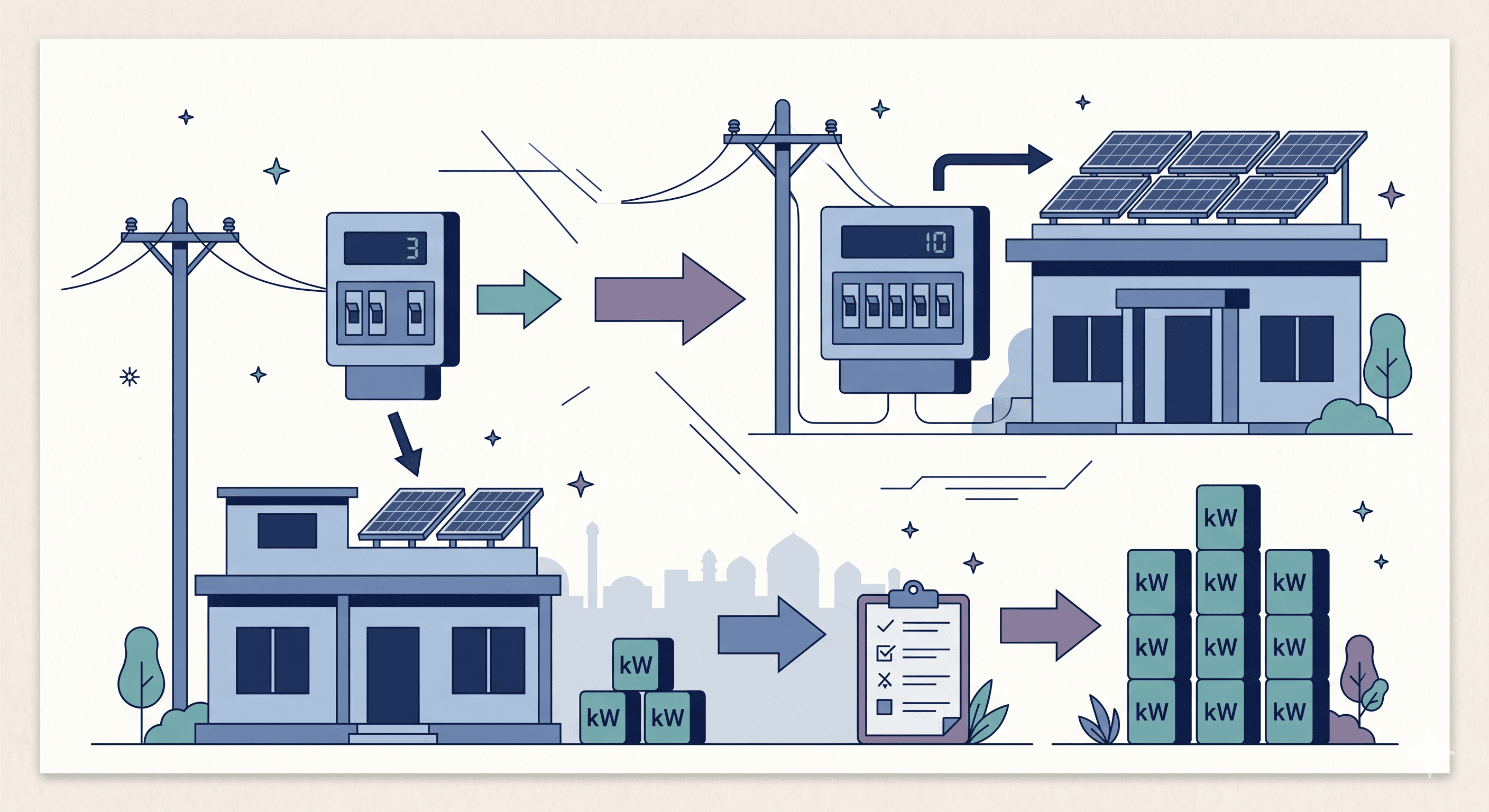
Sanctioned load can hard-cap what system size is realisticCopy section link
In practice, sanctioned load can shape what kind of system recommendation is realistic for your site. If a supplier proposes a system without clearly connecting it to your sanctioned load context, you may later discover that approval pathways, expected exports, or commercial assumptions are not as straightforward as the original sales conversation suggested. This is why sanctioned load should be discussed before you approve a design, not after.
How sanctioned load constrains the recommendation
Sanctioned load = X kW
This is the starting cap for the connection.
Recommended size <= sanctioned load
The proposal should show the load basis it used.
250 kW threshold
Larger systems can trigger load-flow study requirements.
Network constraints
Transformer saturation may still block an application.
The current rule is explicit: proposed capacity cannot exceed sanctioned loadCopy section link
This is not just a market convention. The current NEPRA Prosumer Regulations say the proposed distributed generation capacity shall not exceed the sanctioned load. That single line should immediately change how buyers read aggressive sizing recommendations. A proposal can look attractive on roof use, savings, or module count and still be weak if it is not anchored to the sanctioned load that actually governs the connection.
Proposal differences often come from different sanctioned-load assumptionsCopy section link
Two suppliers may recommend different system sizes for the same property and both can appear reasonable until you examine the assumptions. One may be sizing around practical utility constraints, while another is selling a larger capacity based on optimistic assumptions about what can be approved or how exports will be treated. Without clarity on sanctioned load, it becomes harder to compare proposals fairly.
Transformer saturation and load-flow review can block an otherwise attractive designCopy section link
Sanctioned load is not the only control point. The current rules also prevent new approvals when cumulative distributed generation on the transformer reaches the prescribed threshold, and they require a load flow study for systems at or above 250 kW. So even a technically sensible size can become procedurally difficult if the surrounding network condition is tighter than the proposal assumes.
Credible suppliers can explain the sizing logic in plain languageCopy section link
You do not need to become a policy expert. You just need to know whether the supplier has checked the right practical constraints. A credible answer should connect sanctioned load, usage pattern, and utility-related assumptions in a way that makes commercial sense for your case.
The best system size is the one that still works under approval constraintsCopy section link
Treat sanctioned load as part of decision quality, not just paperwork. The best proposal is not always the one with the biggest capacity or most dramatic savings number. It is the one that stays commercially sensible after policy, approvals, and usage realities are taken into account. That is exactly why comparing proposals in a structured way matters.
Quick checklist
- ✓Ask the supplier what sanctioned load they are using as the basis for the proposed system size.
- ✓Check whether the recommended capacity depends on approvals or utility-side conditions not yet confirmed.
- ✓Do not assume the largest physically possible system is the best commercial choice.
- ✓Make sure the proposal explains what may need to change if sanctioned load becomes a constraint.
Related questions
Sources and notes
Continue with adjacent guides
Buyer action
Want to check whether your system size fits approval constraints?
Share your project details and we'll help you review sizing, sanctioned load, and approval logic before you commit.